
Complete Guide to Caring for Datz Tiger Fish
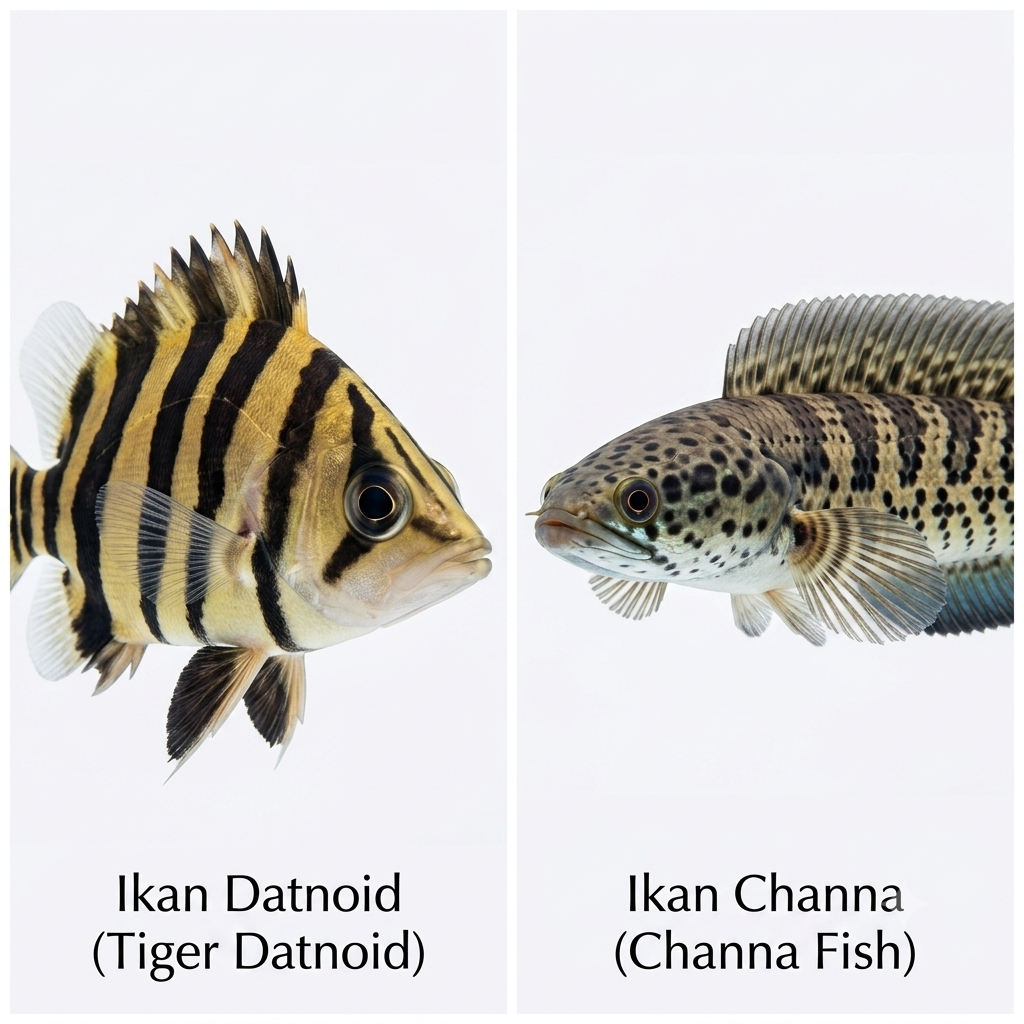
The Datz Tiger (also known as the Tiger Fish) is a predatory freshwater fish that has become increasingly popular among aquarists due to its striking tiger-like pattern — a golden-yellow to orange base color with bold vertical black stripes (commonly called bars). This species is native to Southeast Asia, including Indonesia (Sumatra, Kalimantan, and Papua), Malaysia, Thailand, Cambodia, and Vietnam.
Although they look fierce, Datz Tiger care is relatively straightforward. However, because of their large adult size and predatory nature, several important factors must be considered. Here is a complete guide to keeping them healthy and thriving.
1. About the Datz Tiger
The Datz Tiger (scientific name: Datnioides microlepis) is a predator that can grow to 35–45 cm (14–18 inches) in length. With proper care, they can live for 10–15 years.
One of their main attractions is the number of vertical stripes (bars) on their body. Most Datz Tigers have 4–6 bars, but specimens with only 3 bars are considered rare and can command exceptionally high prices.
This species was first formally described in 1854 by the Dutch physician and ichthyologist Pieter Bleeker, with the type locality being the Kapuas River in Kalimantan.
2. Aquarium Size
This is the most critical factor in keeping a Datz Tiger. These fish need plenty of swimming space due to their large size and active nature.
| Fish Size | Recommended Aquarium Size |
|---|---|
| Juvenile / Small | Minimum 100 cm (40 inches) in length |
| Adult | Minimum 200 liters (~50 gallons) – ideally 120–180 gallons |
Many experts recommend a tank capacity of 450 liters (120 gallons) or more for fully grown adults. An overcrowded tank will cause stress and stunt the fish's growth.
3. Water Parameters
Datz Tigers are sensitive to sudden changes in water quality. Keep these parameters stable:
| Parameter | Ideal Range |
|---|---|
| Temperature | 24–28°C (75–82°F) |
| pH | 6.5–7.5 |
| Water Hardness | 5–12 dGH |
Perform 25–30% water changes every week to maintain pristine water quality. Use a powerful filtration system, as these fish produce a heavy bioload due to their carnivorous diet.
4. Décor & Environment
In the wild, Datz Tigers inhabit waters rich with vegetation, tree roots, and hiding spots. Despite being predators, they are actually quite shy. Provide the following:
- Driftwood and rocks to create caves and hiding places
- Hardy aquatic plants such as Anubias or Java Fern
- Dim lighting — bright light can cause stress and reduce their activity
- Moderate water flow — they prefer calm currents, not strong turbulence
5. Diet & Feeding
Datz Tigers are carnivores and in the wild they hunt small fish and invertebrates. Here is a feeding guide:
| Food Type | Details |
|---|---|
| Live small fish | Favorite food; stimulates natural hunting instincts |
| Shrimp (whole or chopped) | Excellent protein source |
| Worms (bloodworms, earthworms, tubifex) | Highly relished, even by picky eaters |
| Crickets | Great variety to enhance coloration |
| Predator pellets | More economical, but may require training |
Avoid feeding feeder fish from unknown sources, as they may introduce diseases into your aquarium.
6. Tank Mates
Datz Tigers are solitary and territorial. Adults tend to be aggressive toward their own kind, while juveniles can be kept in groups. Important considerations:
- Do not house with smaller fish — they will be seen as prey
- Best kept alone or with similarly sized tank mates
- Can coexist with other non-aggressive fish of comparable size
- Avoid overly aggressive species, as they can stress the Datz Tiger
7. Health & Diseases
Datz Tigers are prone to certain illnesses if water quality declines:
| Disease | Cause | Prevention |
|---|---|---|
| White spot (Ich) | Sudden temperature changes, stress | Keep temperature stable, quarantine new arrivals |
| Fin rot | Poor water quality | Regular water changes, strong filtration |
| Color fading (burnout) | Stress, uncomfortable environment | Provide hiding spots, stabilize all parameters |
A healthy Datz Tiger will display vivid colors and move actively. If your fish appears lethargic, refuses to eat, or turns dark/grayish, immediately check water quality and environmental conditions.
8. Important Notes
- No successful captive breeding has been reported — all specimens in the trade are wild-caught
- Prices range from tens to hundreds of dollars, depending on size, clarity of pattern, and the number of bars (3-bar specimens are the most valuable)
- They grow slowly, but will eventually reach their full impressive size over their long lifespan (up to 15 years)
Conclusion
Keeping a Datz Tiger requires a genuine commitment, especially when it comes to tank size and water quality. However, with proper preparation — a large tank, strong filtration, a suitable diet, and a comfortable environment — this exotic predator will become a stunning centerpiece in your aquarium for many years. The key to success is consistency in maintaining water parameters and providing ample space for your fish to grow and thrive.